What Happened and Why It Mattered
On the morning of 23 February 1885, John Henry George Lee was led from his cell in Exeter Prison to the execution shed prepared within the prison yard. The gallows were of a standard drop design, tested just days earlier by prison staff. Lee, convicted of the murder of Emma Keyse, was due to be executed at 8:00 a.m. by James Berry, the Home Office-appointed executioner. This was to be the John Lee failed execution.
What followed would stun the officials present, raise urgent questions in Parliament, and permanently alter Lee’s fate — and legacy.
Preparations
Berry arrived at Exeter the day prior. He inspected the scaffold mechanism, which he had used successfully before. The gallows consisted of twin trapdoors, controlled by an iron lever and bolt. When the lever was pulled, the bolt should withdraw and the trap fall open, allowing the prisoner to drop and be hanged.
Lee spent the final evening in prayer, reportedly calm. He refused a final meal and declined the services of the prison chaplain. His final letter to his family repeated his innocence.
John Lee failed execution
Attempt One
At 8:00 a.m., Lee was escorted to the gallows by the prison governor, the medical officer, two warders, and James Berry. His arms and legs were strapped, and the noose fixed. The white cap was placed over his head.
Berry stepped to the lever and pulled it.
Nothing happened.
There was a pause, some confusion, and Berry inspected the trap. Finding nothing visibly wrong, the bolt was reset. Lee remained standing calmly throughout.
Attempt Two
Berry again withdrew the bolt. Again, the trap refused to fall.
The prison surgeon bent to examine the underside of the platform. The governor tested the bolt by hand. Each time, the bolt retracted — but the trapdoor remained unmoved.
Berry removed Lee from the gallows while further inspection was carried out. The platform was raised, oiled, and tested with a sandbag. It worked flawlessly. With no visible fault, the execution was ordered to proceed again.
Attempt Three
Lee was brought forward once more. He was again secured. Berry made the third attempt.
Once more, the trap failed to open.
At this point, the Home Office official present — Mr. G. L. Griffith — ordered that the execution be suspended.
Lee was taken back to his cell.
The Immediate Aftermath
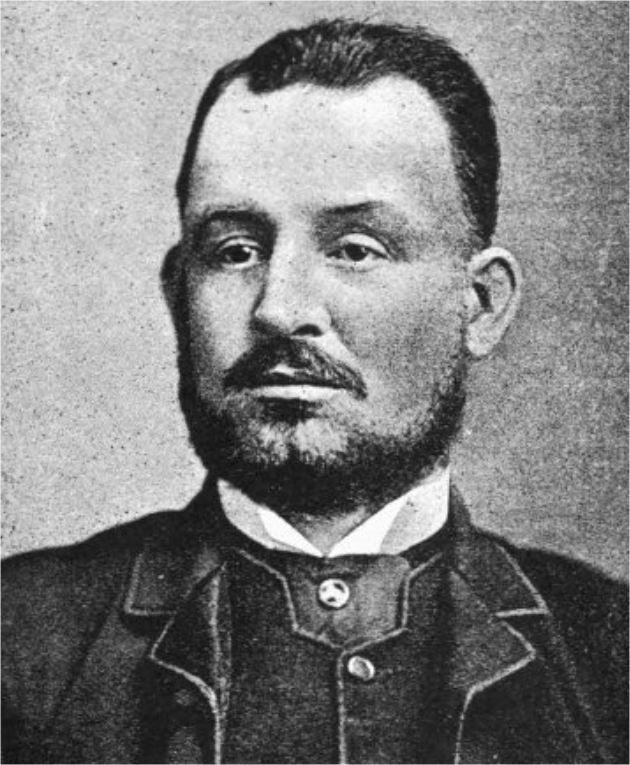
The failure of the execution was unprecedented in modern English penal history. The gallows had been tested. The mechanism functioned when unloaded. Yet each time Lee stood upon it, the trapdoors remained closed.
The event caused immediate sensation:
-
Berry was deeply shaken and later claimed he had nightmares about the event for years.
-
The Home Office ordered a full inquiry into the condition of the gallows.
-
Exeter Prison officials were questioned about potential mechanical or environmental interference.
-
The press seized upon the anomaly, though initial reports were restrained and based solely on official statements.
A detailed report was submitted by Berry, the prison governor, and attending witnesses. The mechanism was tested once again using a 70-pound sandbag, and dropped cleanly. Some speculated that Lee’s weight distribution had interfered with the doors. Others blamed swelling timber or misalignment of hinges.
But no conclusive mechanical fault was ever proven.
The Home Secretary’s Decision
The execution attempt had a profound effect on the public and political mood. While there was no formal appeal process in place at the time, Lee’s counsel and family submitted urgent petitions.
Public sympathy began to grow. Newspapers that had earlier condemned him now referred to “divine intervention” or the “hand of providence.”
The case reached Home Secretary Sir William Harcourt, who reviewed the prison reports and consulted with the Lord Chancellor. In early March, Harcourt made the decision:
“The law intends the prisoner shall be hanged by the neck until dead — not subjected to repeated attempts. The execution shall not be carried out.”
On 6 March 1885, John Lee’s sentence was commuted to life imprisonment, without further trial.
Public Reaction
The failed execution became a national talking point. While Lee’s guilt was not officially questioned, his survival led many to view him as a man spared by fate — or, in the eyes of some, by justice.
Church sermons referred to him as the man “God would not allow to die.” Public fascination grew. Ballads were written. Sensational press accounts followed (though none are included in this archive). He became known by the epithet that would follow him forever:
“The Man They Could Not Hang.”
Legal and Technical Legacy
The incident had immediate consequences for the English penal system:
-
Execution protocols were revised to include redundancy testing of gallows mechanisms.
-
Home Office procedures for certifying gallows equipment became more stringent.
-
Public and political calls for abolition of the death penalty gained renewed momentum.
James Berry continued in his role but was haunted by the Lee case. He later wrote of the event in his memoirs, describing it as the turning point that first caused him to question capital punishment.
Lee’s Statement
Lee himself never wavered in his claim of innocence. In a written statement dated March 1885, he wrote:
“I do not know why the trap would not open. But I believe the Lord had stayed the hand of man. I am not afraid to meet my Maker — only to suffer for what I did not do.”
To explore the full story of John Lee, see The Babbacombe Murder.