Introduction: The Babbacombe Murder – A Reinvestigation
The Babbacombe murder is a case that refuses to rest. More than a century has passed since the night of 15 November 1884, when Miss Emma Keyse was murdered at her seaside home, The Glen. Her servant, John Henry George Lee, was arrested within hours, convicted within months, and sentenced to hang — only to become a legend when the gallows failed not once, but three times.
Dubbed “The Man They Could Not Hang,” Lee’s story has been retold in plays, novels, and films. Yet what has been lost in those versions is the sober reality of the crime, the flawed trial, and the unanswered questions that still trouble the historical record.
This site returns to the core evidence — the documented facts, the original testimonies, the forensic findings, and the political decisions that shaped one of the most remarkable episodes in British legal history.
We approach this case not as folklore, but as history. The aim is to lay out what is verifiably known, to examine what remains uncertain, and to explore how a botched execution turned a Devonshire footman into a symbol of doubt and survival.
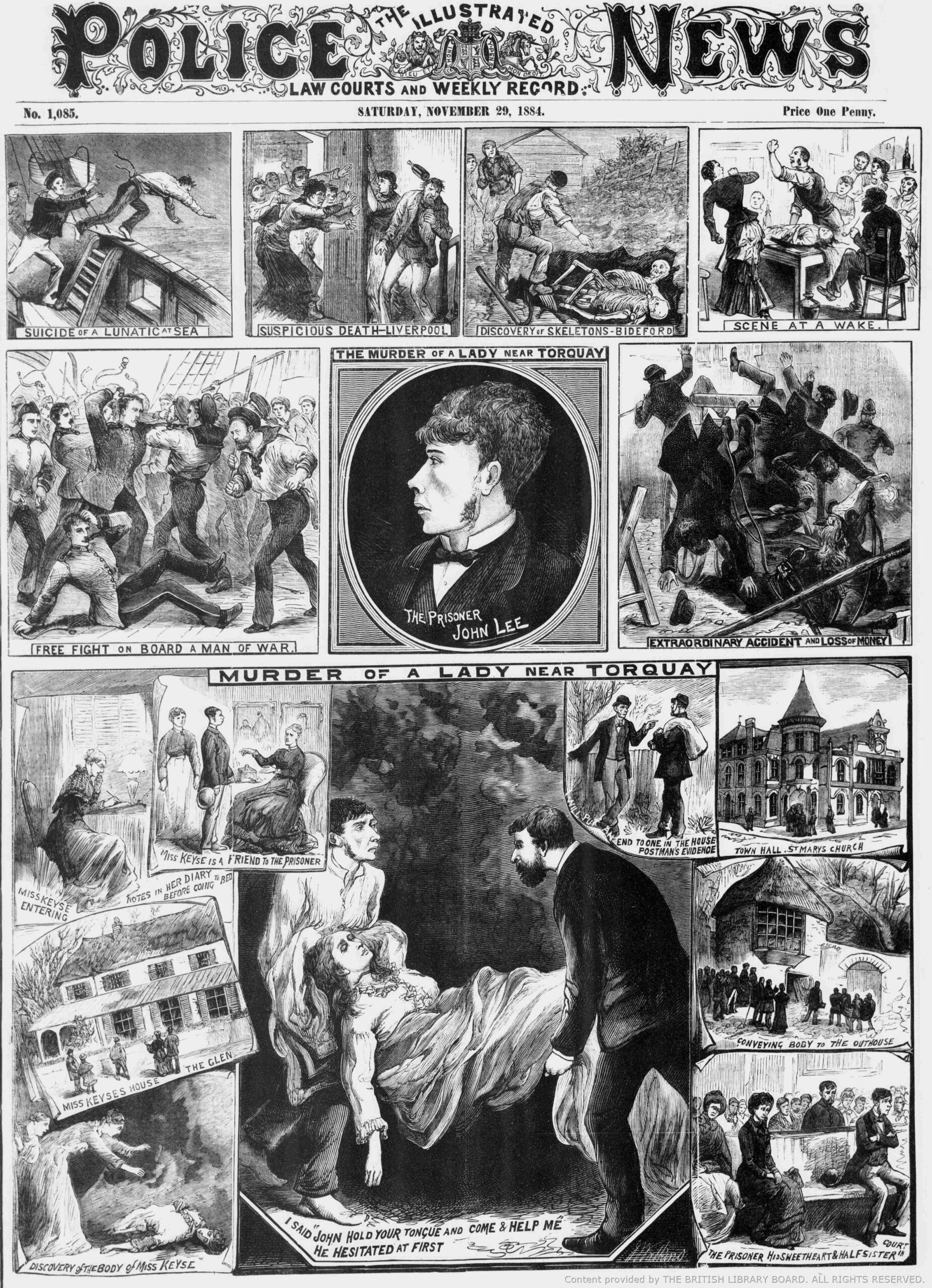
What makes this case extraordinary is not just the failed hanging — though that alone is without precedent in British legal history — but the deeper implications of what may have happened at The Glen. Lee was not an ideal defendant: he had a criminal past, he lied during interviews, and he showed little emotion at trial. Yet his guilt was never conclusively proven. The case against him was entirely circumstantial.
Over time, doubts have grown louder. In 1936, nearly fifty years after the murder, a previously unpublished account alleged that Lee had shielded another man — a figure of public standing — who may have struck the fatal blow. The woman at the centre of that theory, Elizabeth Harris, Lee’s half-sister, was pregnant at the time, gave damning testimony against him, and later vanished from historical record. Her rumoured deathbed confession, though never verified, continues to cast a long shadow.
What also persists is the unshakable sense that the truth was suppressed — whether by design, convenience, or fear. The coroner overreached. The defence was weak. The press vilified. And when the trapdoor refused to open beneath John Lee’s feet, the state quickly moved to commute his sentence and quieten the storm.
This archive is the result of decades of independent research. Here, we reconstruct the full history: not just what happened at The Glen, but how it was interpreted, distorted, and weaponised by the Victorian establishment and later popular media.
The question is no longer whether Lee survived the noose — he did. The question is whether justice was ever served — and if the truth, hidden in silence for generations, can still be recovered.